

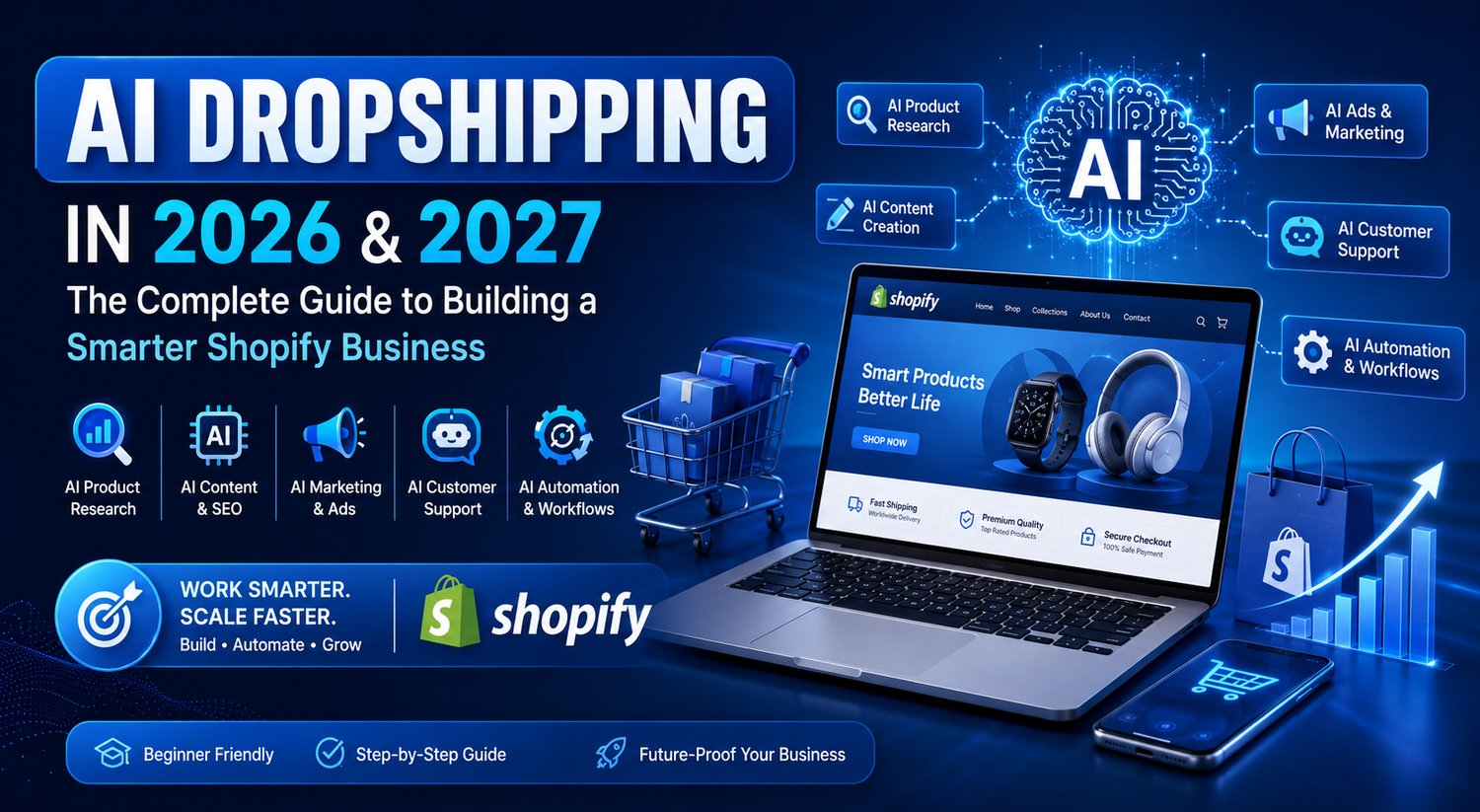
A Complete Beginner's Guide to Building a Real Ecommerce Business with Shopify and AI
Introduction
If you've searched for how to start Shopify dropshipping, you've probably seen hundreds of videos and articles promising quick success, easy money, or a fully automated business. Many of those claims leave out an important reality: building a successful ecommerce business takes planning, continuous learning, and consistent execution.
The good news is that the tools available today are better than ever. Shopify continues to make it easier to launch an online store, while AI can help you work more efficiently by assisting with research, content creation, marketing ideas, and repetitive tasks. Used wisely, these tools can reduce costs and help small businesses compete more effectively.
This guide is different.
Instead of repeating outdated tactics or encouraging you to chase the latest viral trend, this guide focuses on building a sustainable ecommerce business. You'll learn how to research products using data, create a trustworthy Shopify store, improve your marketing with AI, and develop systems that can grow over time.
Whether you're starting with €1000+ or a larger budget, the goal is the same: build a store that delivers value to customers and makes informed business decisions based on evidence rather than guesswork.
Why This Guide Is Different
Many beginner guides still recommend tactics that no longer provide reliable results, such as copying another store, importing random trending products, or relying entirely on paid advertising.
Today's ecommerce environment is more competitive, but it's also full of new opportunities.
This guide is based on five core principles:
1. Build a Real Brand
Customers are more likely to buy from businesses that appear trustworthy, professional, and consistent. Your store should communicate value through clear branding, useful content, and a smooth shopping experience.
2. Use AI as an Assistant
AI can help you generate ideas, draft content, analyze competitors, and automate repetitive work. It should support your decision-making, not replace it.
3. Focus on Solving Problems
Products that address genuine customer needs often have stronger long-term potential than products chosen only because they are trending.
4. Learn Through Testing
Every business involves experimentation. Testing different products, marketing messages, and website improvements helps you learn what works for your audience.
5. Think Long Term
Rather than aiming for overnight success, focus on building systems, improving customer trust, and creating assets such as SEO content and email lists that continue generating value.
Is Shopify Dropshipping Still Worth It in 2026 and 2027?
One of the most common questions is whether dropshipping is "dead."
The short answer is NO.
However, the business model has changed.
Years ago, it was sometimes possible to copy a product from a marketplace, launch a basic store, and generate sales with minimal effort. As ecommerce matured, customer expectations increased.
Today's shoppers expect:
- Fast-loading websites
- Professional design
- Clear product information
- Reliable customer support
- Secure payment options
- Honest shipping estimates
- Authentic branding
Businesses that provide a better experience are more likely to earn trust and repeat customers.
The opportunity still exists, but the standard is higher.
Understanding What Dropshipping Really Is
Dropshipping is a fulfillment method, not a business strategy.
Here's how it works:
- A customer places an order on your Shopify store.
- You forward the order to your supplier.
- The supplier ships the product directly to the customer.
- You manage the customer relationship, marketing, and support.
Because you don't usually hold inventory, the initial investment can be lower than with traditional retail. At the same time, your success depends on choosing reliable suppliers, presenting products honestly, and delivering a good customer experience.
Why Most Beginners Struggle
It's tempting to believe that failure comes from choosing the wrong product alone, but in reality, there are several common reasons:
Expecting Immediate Results
Many new entrepreneurs expect sales within a few days. Building traffic, trust, and marketing skills often takes time.
Skipping Research
Launching products without understanding demand, competition, or customer needs increases the likelihood of poor results.
Weak Store Presentation
Customers compare your website with established online retailers. A cluttered or outdated design can reduce confidence.
Poor Product Pages
Successful product pages explain benefits, answer common questions, and make purchasing easy. Simply copying supplier descriptions rarely performs well.
Depending on One Marketing Channel
Businesses become more resilient when they diversify. Combining search engine optimization, social media, email marketing, and advertising reduces reliance on a single source of traffic.
- Quitting after one failed product
- Copying competitors exactly
- Poor product pages
- Slow website
- Using low-quality images
- Ignoring customer support
- Not testing creatives
- Running ads without research
- Expecting overnight success
- Constantly switching niches
The Real Struggles of Dropshipping
Every successful store owner experiences setbacks.
Common struggles include:
- No sales for weeks
- Product failures
- Supplier issues
- Ad account bans
- Refund requests
- Website redesigns
- Creative burnout
- Budget limitations
These challenges are normal.
The people who succeed keep improving instead of giving up.
The AI Revolution in Ecommerce
Artificial intelligence is changing how online businesses operate.
Instead of replacing entrepreneurs, AI helps them work more efficiently.
Examples include:
- Researching product ideas
- Drafting product descriptions
- Generating blog outlines
- Improving SEO
- Creating image concepts
- Planning marketing campaigns
- Summarizing customer feedback
- Automating repetitive workflows
This allows small businesses to complete tasks that previously required multiple specialists.
However, AI outputs should always be reviewed, edited, and verified before publishing.
Building the Right Mindset
Technology alone does not create successful businesses.
Your habits and decision-making matter just as much.
Successful ecommerce entrepreneurs typically focus on:
- Continuous learning
- Careful testing
- Customer satisfaction
- Data-driven decisions
- Long-term improvement
Instead of asking, "How can I get rich quickly?" ask:
"How can I build a store that customers trust enough to buy from and recommend?"
That shift in thinking influences every decision you make.
Choose Progress Over Perfection
Many beginners delay launching because they believe every detail must be perfect.
In reality, ecommerce businesses improve over time.
A better approach is:
- Launch a solid foundation.
- Collect feedback.
- Analyze results.
- Improve continuously.
This cycle allows you to make informed changes instead of guessing what customers want.
Setting a Realistic Budget
Your starting budget depends on your goals, but it's important to allocate funds thoughtfully.
Typical categories include:
- Shopify subscription
- Domain name
- Premium theme (optional but often worthwhile for advanced features)
- Marketing
- Product samples
- Essential apps
- Creative assets
Rather than spending heavily on every tool available, focus on investments that improve customer experience or help you make better decisions.
If you're looking for professionally designed Shopify themes built with ecommerce best practices in mind, you can explore our collection here:
Premium Shopify Themes
Premium Shopify Themes Collection
For merchants who want a modern, conversion-focused design, our featured recommendation is:
Elixir Shopify Theme V1
Your First 30 Days
Instead of trying to master everything immediately, focus on building a strong foundation.
Week 1
- Learn the basics of Shopify.
- Understand how dropshipping works.
- Explore AI tools for research and writing.
Week 2
- Choose a niche.
- Study competitors.
- Identify customer problems worth solving.
Week 3
- Build your Shopify store.
- Create essential pages.
- Write original product content.
- Optimize your homepage.
Week 4
- Test your store.
- Review mobile performance.
- Publish your first helpful blog article.
- Begin promoting your business through one or two marketing channels.
Progress during the first month is about learning and improving, not chasing unrealistic sales targets.
Frequently Asked Questions
How much money do I need to start Shopify dropshipping?
Many beginners start with a few hundred dollars, but your required budget depends on your products, marketing strategy, and business goals. Plan for expenses such as your Shopify subscription, domain, apps, creative assets, and advertising or content creation.
Can beginners succeed?
Yes. Success comes from consistently learning, testing, and improving rather than expecting instant results.
Is Shopify the best platform?
Shopify remains one of the most popular ecommerce platforms because it's easy to use, scalable, and supported by a large ecosystem of themes, apps, and integrations.
How long until I get my first sale?
There is no fixed timeline. Some stores generate sales within days, while others take weeks or months. Product quality, marketing execution, website trust, and consistency all play a role.
Is SEO important for dropshipping?
Absolutely. Publishing high-quality blog content, optimizing product pages, and improving site speed can help generate long-term organic traffic and reduce reliance on paid ads.
Final Thoughts
Shopify Dropshipping in 2026 and 2027 is no longer about finding a secret product or copying someone else's store. It's about building a professional ecommerce business that customers trust. Focus on solving real problems, creating an excellent shopping experience, and making decisions based on data. Keep learning, test consistently, improve every week, and be patient with the process. Every successful store started with a first product, a first visitor, and often several failures before finding what worked. If you commit to steady improvement, build a fast and trustworthy store, and keep your customers at the center of every decision, you'll be far ahead of most beginners entering the ecommerce space.
Comments ()